 Don’t just smile for photos. The few seconds it takes to smile—anytime and often–has tremendous value and it’s free.
My favorite columnist, Harvey Mackay, reminded me that it’s National Smile Week, held annually during the second week of August.
Did you know these facts about smiling?
- A smile improves your looks and takes years off your appearance.
- Smiling makes you more approachable, increases your attractiveness, makes you appear more intelligent and improves relationships. Smiling conveys a message of happiness, approachability, and confidence. (These are things managers typically look for in employees.)
- Health benefits from smiling are enormous, Research has shown that a smile is a natural antidepressant; it reduces stress/anxiety and elevates moods. Smiles can help the immune system, lower blood pressure, and even serve as a pain reliever.
- Because smiling has the power to reduce stress, it increases your ability to deal with trying situations. Why? Smiling boosts endorphin output and forces us to breathe deeper, resulting in a calmer outlook and increased coping ability.
- Smiling encourages positive thinking. When dealing with a negative situation, a candid smile inspires positivity.
- If you’re having a bad day, force yourself to smile. Research suggests that the act of smiling can actually trick the brain into feeling happier, no matter how bad the current situation may be.
- Smiling is contagious. Just think — you can help another improve their well-being by giving them a chance to smile back! Happy people influence the people closest to them and provide a boost of good energy. So, next time you’re feeling down, seek out your happiest friend and let the smiles begin.
- No matter where you are in the world, smiling is recognized as a universal display of happiness and good nature.
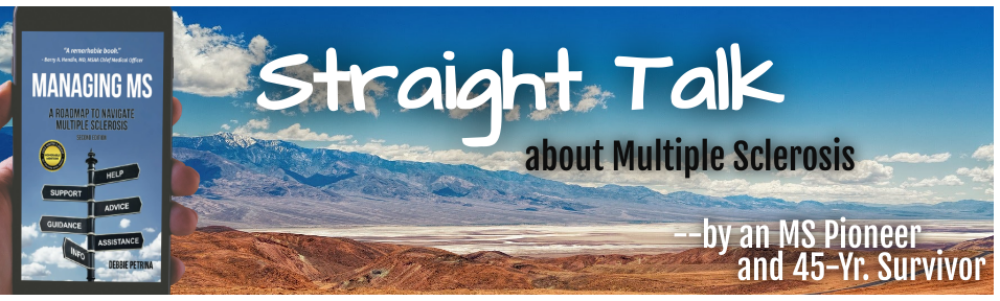
In my book Managing MS, here’s one of the tips I share for how to deal with people when you have MS:
“Smiles and kindness go a long way–
Even if you feel crabby, fake a smile anyway. We need people and most of us like to interact with people. I’m almost always nice and smiling at people. When I ask for help, which in my case I have to ask for help a lot, I get what I need with a smile back. If I’m in a grocery store and can’t reach an item, I’ll nicely ask “When you have a moment, would you reach something for me?” I always get help, usually followed by the offer to let them know if I need anything else.
When I was in the hospital last year, even though I felt miserable I always was kind and patient with the nurses. The nurses would actually give me extra attention, because they would remark how cranky everyone else was. They would sometimes hang out for a few minutes to yak, which actually elevated my moods. It’s hard to do when you yourself are feeling so miserable, but the positive responses back are worth it.”
Don’t you think that if people smiled more, it would help make the world a kinder and happier place? While smiling certainly doesn’t fix all problems, it certainly has the power to make us feel just a little better at any given moment.

Debbie Petrina
Author of Managing MS
Moderator, MultipleSclerosis.net


 My husband and I have traded shoes. He’s almost always the one who feels helpless when MS causes my pain or discomfort. Now I feel helpless watching him grimace from the pain caused by his shingles. The difference is I couldn’t prevent MS; he could have prevented shingles.


 Going to Alaska was a dream on my bucket list that came true. I was in my fifties, and despite the nervousness about my ability to handle such a trip, I was determined to go. I often say that my legs don’t work, but I have a mouth and a brain to get what I want. It took a ton of planning that was done a year in advance, but boy, it was worth it.
 On the cusp of our MS diagnosis, we are gripped by fear and panic. With no cure, we envision ourselves entering a dark tunnel of unknowns. How do we begin living with it? What will life be like? What will be at the other end of the tunnel? A never-ending list of questions follow.
 ?????????